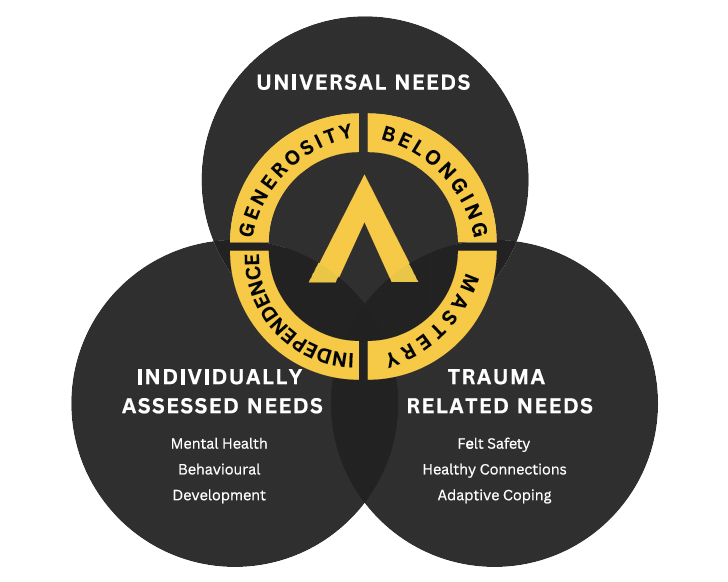
The Needs-Based Restorative Framework guides the work of Allambi Care’s staff and volunteers including Intensive Therapeutic (Residential) Care staff, foster carers, family support staff, caseworkers and clinicians. The framework is based on our commitment to respond to the multiple needs of people rather than requiring them to adjust to a pre-determined service model. It applies whether they are living in the community with families or peers or are being supported in out-of-home care. There are three core components of the framework. The central focus is on the normal and shared developmental needs of all people and the defining features of healthy growth as defined in the Circle of Courage.
This month we're exploring INDEPENDENCE.
Remember the first time you became aware of your mum fussing over you? Perhaps you were getting ready for your cousin’s birthday party, and she had decided what you were going to wear. You stood there feeling uncomfortable in an outfit you wouldn’t have chosen, while she ran her hand over the front of your hair to flatten it down. You pulled away, rolled your eyes or complained that you could do it yourself. She was only trying to help, but all you wanted was a little say in how you looked.
Now imagine never quite getting that opportunity. Imagine someone always choosing for you, stepping in before you have a chance to try, or completing a task because it is quicker than letting you work it out. Even when these actions come from a place of care, they can leave you feeling that you are not trusted, capable or old enough to have a say.
For young people, independence is about more than practical skills. It means having a voice in decisions and building confidence to do things for themselves.
Independence is a Universal Need
Independence is the next of our four Universal Needs, alongside Belonging and Mastery, which we have already explored. These needs are important to all of us, regardless of age, background or circumstances.
Independence gives young people opportunities to make choices, take responsibility, develop skills and gain control over their lives.
Research into adolescent development highlights the importance of autonomy and having a say in decisions. When young people are supported to make choices, rather than simply being told what to do, this can contribute to their wellbeing, confidence and development.
This does not mean giving young people complete freedom. It means offering opportunities suited to their abilities and needs, while remaining available to support them.
Independence does not mean being alone
A recent UK government-commissioned review examined the deaths of 112 care leavers aged 18 to 24 in England during 2025. It found that the death rate among this group was three to four times higher than in the general population, highlighting the devastating consequences that can follow when young people experience profound isolation and support falls away as they reach adulthood.
The review called for greater emphasis on enduring, trusted relationships, recognising that preparing young people for adulthood involves far more than teaching practical skills or planning a transition out of care.
This is an important reminder for us at Allambi Care. Our goal is not simply to teach young people to do things for themselves, but to help them develop the confidence, skills and relationships they need to navigate life. Independence should never mean having to manage everything alone.
The relationships we build with young people today can help them develop trust, confidence and a stronger sense of belonging as they move towards adulthood.
Doing things for young people or with them?
As Support Workers, it can be tempting to do things for young people. We are busy, routines need to be maintained, and sometimes completing a task ourselves is quicker and easier.
We might make breakfast or tidy bedrooms to make life easier, avoid conflict and get things done.
But we need to ask ourselves: Are we helping this young person develop independence, or are we unintentionally creating dependence?
During Induction, our L&D trainers remind new Support Workers to create opportunities for young people to build confidence in the kitchen.
Rather than automatically taking charge of Thursday night’s spaghetti bolognese, invite the young person to show you how they make it. Let them take the lead, share their skills and build on what they already know.
One day, the young person will leave Allambi and need to prepare meals for themselves. The skills and confidence we help them develop today can make a real difference to their independence tomorrow.
Choice builds confidence
Independence begins with small decisions. What would you like for breakfast? Which activity would you prefer? What clothes would you like to wear?
These choices give young people opportunities to practise decision-making and experience the consequences.
Not every choice will be practical, and not every decision will work out. That is part of learning. Our role is to provide reasonable boundaries, explain options and help young people think through decisions without unnecessarily taking control.
When young people see that their opinions are taken seriously, they can develop a stronger sense of agency: the belief that their actions and decisions matter.
Independence looks different for everyone
Independence looks different for everyone. One young person might be ready to travel independently, while another is still learning personal hygiene.
Consider each young person’s strengths, abilities, communication needs and experiences, and provide meaningful opportunities without unrealistic expectations.
For some, independence might mean completing an entire task. For others, it might mean choosing between two options, attempting one step with support or asking for help when needed.
Mistakes are part of learning
Our response matters when a young person makes a mistake. If we criticise, take over or use mistakes as evidence that they cannot manage, we risk discouraging them from trying again. Instead, help them reflect on what happened, consider what they might do differently and recognise what they have learned.
Independence is not about getting everything right. It is about developing the skills, judgement and confidence to have another go.
Encouragement such as, “You worked that out yourself,” or, “What might help you next time?” reinforces effort and problem-solving, rather than focusing only on the outcome.
So, what can you do today?
Creating opportunities for independence often begins with a small adjustment to how we support a young person. Before completing a task for them, pause and ask yourself:
- Could this young person have a go themselves?
- Could we do it together so they can learn?
- Am I stepping in because they need support, or because it is quicker?
- Have I given them a meaningful choice?
- Am I helping them build the skills and relationships they will need beyond our care?
Call to action: create an opportunity for independence today
Over your next few shifts, identify one thing you usually do for a young person that they could learn to do themselves. Invite them to participate, offer guidance without taking over, and allow them to build confidence and skills.
Remember that independence is not about withdrawing support. It is about providing the right support while helping young people develop the confidence to take their next steps. Share your experience with colleagues and reflect on what worked and what the young person learned.
Our challenge is simple: don’t just do things for young people. Create opportunities for them to discover what they can do for themselves, while making sure they know they don’t have to face the world alone.